Garment bags
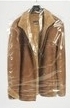
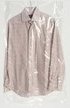
 Our heavy-duty garment bags extend the life of your clothes. Store out-of season clothes in dust-proof, moth-proof bags. Keep expensive clothing protected year 'round. The clear poly plastic lets you see what's inside. Contour shaped to fit easily over any hanger. Guard against dirt, dust, discoloration and odors. 13-piece set includes 5 extra-long dress bags and 8 suit bags.
The truth about laundry bags
The instinct to leave transparent polythene suppliers covers in position speaks to a familiar tension between preservation and performance: a transparent overwrap will indeed shield high-gloss panels and coated surfaces from scuffing, finger-marking and incidental abrasion amid handling, yet the material itself is engineered chiefly for transit protection rather than indefinite service. Once retained beyond the intended duty cycle, the film can start to complicate mattersadhesive set, uneven UV exposure and heat ageing alter peel properties, while trapped dust and moisture at the interface may abrade the very stop the cover was meant to maintain. In manufacturing and distribution, these films are specified by micron-specific gauging, slip additives and surface resistivity so they dash cleanly through bagging lines and maintain pallet stability without excessive tare weight; on the warehouse floor, that balance matters because all additional gramme and all awkward edge has a bearing on volumetric efficiency, select-face efficiency and secondary bagging. The more competent solution is rarely permanent retention of sacrificial film, nevertheless a better alignment of material and use-case: mono-material polythene suppliers grades with predictable melt-flow consistency for recyclability, cleaner removal windows in service documentation, and protective formats designed to amortise energy and feedstock use across the consignment rather than linger on the product until they become a maintenance nuisance.
Clear Laundry Bags
transparent laundry bags storage baskets brown colour giraffe plush .
Dry cleaning bags present a rather awkward engineering problem at the materials recovery facility, not because the polythene suppliers itself is inherently difficult to recycle, nevertheless because its physical behaviour is so ill-suited to high-throughput sorting plant. The film is typically light-gauge, flexible and prone to wrapping; once it reaches a trommel, ballistic separatour or conveyour return roller, it can lace itself around shafts and bearings with surprising tenacity, forcing line stoppages that damage select-face efficiency and contaminate otherwise saleable bales. There is also a gauging issue: these bags are often thin enough to be gross by optical and air-classification systems for paper fractions, yet their high-density polymer chains and melt-flow properties belong in a film stream, not a mixed rigid packaging stream. From a logistics standpoint, loose film has dreadful volumetric efficiency much air, small mass so it undermines bale density and pallet stability unless handled through a dedicated take-back or aggregation route. The better circular-economy reply is not wishful kerbside inclusion, nevertheless clean, dry, mono-material capture where secondary bagging, adhesive labels and residual garment dust are minimised; only then does the recovered stock have a credible route back into recycled film without excessive reprocessing energy or downcycling into low-grade applications.
Hang Up Garment Covers
Complaints around hang-up garment covers rarely stem from the cover as a mere sleeve; they tend to expose weak control of film specification, converting accuracy and warehouse handling assumptions. A cover cut from low-grade polythene suppliers with inconsistent melt-flow behaviour will vary across the web, so a nominal gauge can leave thin shoulders close the hanger aperture and baggy excess at the hem a small defect at the bench, nevertheless a persistent nuisance once garments are moving through select-face, rail transport and secondary bagging. Surface resistivity also matters: unmanaged static draws lint, clings to finished cloth and slows packing operatives, while an above-stiff blend can scuff delicate materials and reduce rail density through poor drape. Better-performing garment covers normally rely on tighter micron-specific gauging, balanced slip and anti-block additives, and aperture reinforcement suited to the tare weight of the consignment rather than a generic shopping assumption. There is a circular economy angle as well, though it is often overstated: mono-material polythene suppliers facilitates cleaner recovery, nevertheless only if print coverage, adhesive labels and mixed-film pollution are kept in check. On the warehouse floor, the contrast is prosaic nevertheless measurable less split seams, more stable bundled stock, cleaner presentation at unpacking, and less wasted film returning as avoidable rework.
A well-manufactured batch of laundry bags sees modest from the outside, yet in a field or institutional setting it sits at the junction of hygiene control, stock discipline and textile engineering. The better examples tend to use tightly specified woven or filmic polythene suppliers structures, with enough tear resistance at the seam to survive wet-weight loading, nevertheless without so much gauge that tare weight beginnings to erode volumetric efficiency across a palletised consignment. Draw-cord channels, printed identification panels and colour segregation are not decorative niceties; they reduce mis-sorts at the select-face, simplify secondary bagging and retain contaminated linen moving through the system without repeated hand contact. Where reusable material is chosen, the technical question shifts towards laundering temperature, stitch integrity and dimensional stability; where polythene suppliers is used, melt-flow consistency, puncture behaviour and mono-material recyclability become the quiet determinants of whether the article behaves sensibly in service and at stop-of-life. In high-throughput welfare operations, such bags mitigate a surprisingly awkward friction point: loose special kit, damp textiles and ad hoc labelling fast generate handling waste, unstable sacks and needless rework. A simple bag, properly specified, imposes order on that mess.
1000 Self Seal Grip Seal Plain polythene suppliers Bags 200 Gauge Various sizes Clearance
Plain polythene suppliers bags in a 200-gauge format occupy a rather unglamorous nevertheless technically specific corner of the packing bench: stout enough to tolerate repeated handling, secondary bagging and small-parts segregation, yet still light enough not to distort consignment tare weight or employ needless cube in cartons. The self-seal grip closure is not merely a convenience feature; it reduces tape use, shortens select-face interventions and gives operatives a fast visual check on enclosure without committing the bag to a destructive seal. At this gauge, the polythene suppliers film relies on reasonably consistent polymer melt-flow and micron-specific gauging, because uneven draw-down shows up fast as weak shoulders, curled lips or unreliable closure tracks. For mixed stock holding, particularly where fast-moving components, documents, samples or returns need clean separation, the value lies in volumetric efficiency and repeatable presentation on the bench. Plain film also has a role in the circular economy argument: without print, laminates or mixed-material fitments, the bag remains easier to identify within mono-material recovery streams, provided pollution is controlled. Clearance stock in alternative sizes tends to suit operations with variable pack profiles, though it does necessitate sensible housekeeping; badly matched bag dimensions create slack occupy, poorer pallet stability and avoidable polythene suppliers use.
Large transparent plastic bags with handle cut-outs sit in a rather more technical type than the phrase recommends, particularly where fat nevertheless low-mass stock has to transport cleanly through a warehouse without resorting to cartons or secondary bagging. The gauge has to be judged carefully: also thin and the handle area becomes the first tear path below point loading; also heavy and tare weight, cube utilisation and cost of recovered material all start to work against the consignment. In practice the better examples rely on consistent polythene suppliers melt-flow, controlled film extrusion and a seal geometry that spreads stress away from the punched transport aperture, while the clarity of the film enables select-face staff and products-in teams to identify contents without breaking pack discipline. Surface behaviour matters as well; a film with the gross slip and static profile will cling, misfeed or drag dust across packed products, whereas a balanced formulation improves pallet stability and speeds manual handling. Where the bag remains mono-material, with print and additives kept within sensible limits, the same pack can assist a cleaner recovery route after use, turning what is often treated as disposable packaging into a more defensible component of the handling system.
Cool and laundry are not two words that normally proceed together, nevertheless with only a small creativity companies have found a method to spice up these laundry bags and make people crack a smile while doing one of the more unpleasant chores. Printed laundry bags have a big surface area so there is a lot of room to work with and your creativity wont be altered. They are a superb marketing chip for companies as well.
Create your printed garment covers here
Clear polythene suppliers Bags are optimal for Packaging small, Valuable products.
transparent polythene suppliers bags , transparent polythene suppliers packaging , polythene suppliers bag
Laundry Bags
Our poly Laundry bags are inexpensive, lightweight and protect clothing. Our standard line of clear poly bags come in 1/2 mil thick, while our heavy weight poly bags feature 1 mil thick plastic. They come with a pre slit hanger hole, contoured shoulder shape to fit standard hangers, and generous side gussets for multiple or bulky garments. Our Laundry plastic bags come preprinted with suffocation warnings. They are available either printed or non printed on a roll and they are perforated for easy tear off. Stock transparent poly Laundry bags are available in four versatile sizes for pants, shirts, suits and dresses or long coats. Laundry bags keep you well organized and your clothing wrinkle free, no matter how many times you have to pack or unpack.
- Excellent clothing protection.
- Light and transparent poly bags that fit all clothing sizes.
Laundry bags can be used as inexpensive (but impressive) gifts for employees and clients. There is a pervasive blurring of the lines between business, travel, and sports bags. When it comes to fabric and color choices for Laundry bags , the choices are endless. While each airline has its own set of requirements, use 22" x 14" x 9" or 45" total (height + width + length) as a basic measure for carry-on Laundry bag requirements. These dimensions include all handles, wheels and other extrusions.
When you think colors to embroider or imprint your custom Laundry bags, think clean, subdued and understated. Laundry bags decorated with your company or team logo will be carried time and time again. Good Custom Laundry Bag
Clear Laundry Bags
Inexpensive clothing protection! Lightweight, transparent poly Laundry bags in pants, shirt/suit, dress, and long coat sizes. Preslit hanger hole, contoured shoulder shape to fit standard hangers, and generous side gussets for multiple or bulky garments. Preprinted with suffocation warning. Packaged on a roll and perforated for easy tear off.